
How to Choose the Right Industrial Chiller for Your Induction Heating Machines
December 22, 2025
Selecting the right industrial chiller for induction heating machines is not simply a matter of matching equipment sizes. It is a critical decision that directly affects system stability, heating efficiency, operating costs, and long-term reliability. As induction heating machines continue to move toward higher power, continuous operation, and greater automation, cooling systems have become an essential part of the overall solution rather than an optional accessory.
This article provides a comprehensive guide to help engineers, plant managers, and procurement professionals understand how to choose the right industrial chiller for induction heating applications, avoiding common mistakes and ensuring optimal system performance.
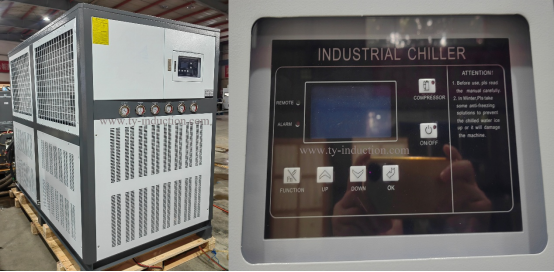
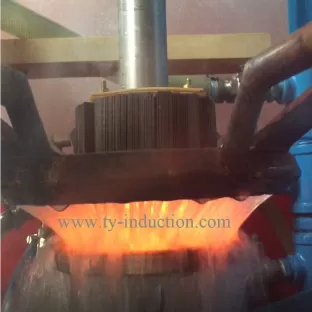
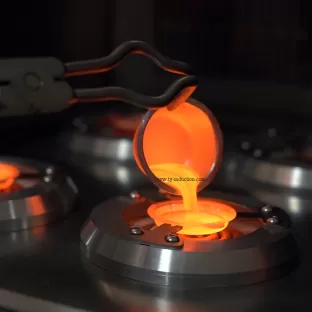
Induction heating machines generate heat through electromagnetic induction, which makes them highly efficient for metal heating, hardening, forging, brazing, and welding. However, this efficiency comes with a challenge: large amounts of residual heat are generated in critical components such as induction coils, power electronics, transformers, and capacitors.
Without effective cooling, these components may suffer from:
· Overheating and thermal stress
· Reduced electrical efficiency
· Unstable output power
· Increased failure rates
· Shortened service life
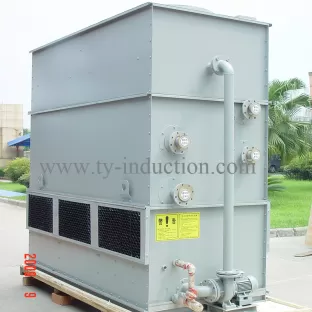
An industrial chiller removes excess heat through a closed-loop cooling system, maintaining a stable water temperature and allowing the induction heating machine to operate safely and continuously.
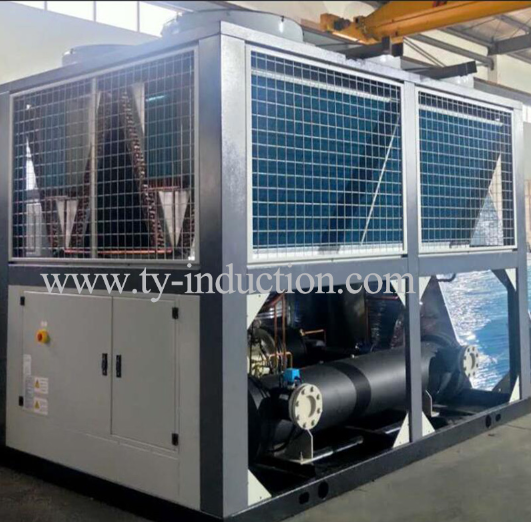
The first and most important step in selecting a chiller is understanding the actual cooling needs of your induction heating systems.
Key parameters to confirm:
· Rated power of the induction heating machines (kW)
· Actual operating power during production
· Continuous or intermittent operation
· Heat load generated by coils and power modules
It is a common mistake to size a chiller based only on the machine’s rated power. In reality, cooling demand depends on how the machine is used in real production conditions. Continuous, high-duty-cycle applications require more stable and higher-capacity cooling than short, intermittent heating processes.
Cooling capacity is typically measured in kilowatts (kW) or refrigeration tons. The required cooling capacity depends on:
· Total heat dissipation from the induction heating machine
· Heat losses from power electronics
· Ambient temperature in the workshop
In induction heating systems, a general guideline is that 5–15% of the heating power may need to be removed as waste heat, depending on efficiency and system design. However, precise calculations are recommended for high-power or mission-critical applications.
Choosing a chiller with insufficient capacity can result in unstable temperature control, while oversizing increases investment and operating costs.
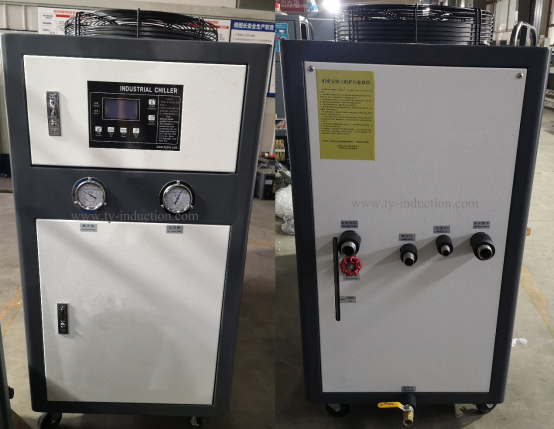
For industrial induction heating applications, closed-loop water cooling systems are widely preferred.
Closed-loop industrial chillers:
· Prevent contamination and scaling
· Reduce water consumption
· Offer stable temperature control
· Support long-term continuous operation
Open cooling systems or simple water circulation may be suitable for low-power or temporary applications, but they often struggle with water quality issues and inconsistent cooling performance.
For medium- to high-power induction heating machines, closed-loop industrial chillers are generally considered standard equipment.
Temperature stability is critical in induction heating processes. Fluctuations in cooling water temperature can affect:
· Coil impedance
· Heating efficiency
· Process repeatability
· Product quality
High-quality industrial chillers can maintain outlet water temperature within a narrow tolerance range, which is especially important for precision heating, heat treatment, and automated production lines.
When selecting a chiller, confirm:
· Temperature control accuracy
· Control response speed
· Ability to operate under varying load conditions
Cooling performance depends not only on temperature but also on water flow rate and pressure. Insufficient flow can lead to localized overheating even if the chiller’s cooling capacity is adequate.
Before selecting a chiller, verify:
· Required flow rate for induction coils
· Pressure loss across piping and heat exchangers
· Compatibility with existing cooling circuits
Proper matching ensures uniform cooling and protects critical components from thermal damage.
The operating environment plays a major role in chiller selection.
Key factors include:
· Ambient temperature range
· Dust, humidity, and airborne contaminants
· Indoor or outdoor installation
· Available space and ventilation
In high-temperature or poorly ventilated workshops, chillers must be designed to operate reliably under challenging conditions. Ignoring environmental factors can significantly reduce cooling efficiency and equipment lifespan.
Industrial chillers run continuously in many induction heating applications, making energy efficiency a critical consideration.
Energy-efficient chillers help:
· Reduce electricity consumption
· Lower long-term operating costs
· Improve overall system sustainability
Features such as optimized compressors, intelligent control systems, and variable load operation can significantly improve efficiency over time. While initial investment may be higher, lifecycle cost savings often justify the choice.
Modern induction heating machines are often integrated into automated production lines. The industrial chiller should be capable of:
· Communicating with the induction heating system
· Providing alarms and status feedback
· Supporting remote monitoring and control
This integration improves operational safety, reduces downtime, and simplifies maintenance management.
Ease of maintenance is another critical factor. A well-designed industrial chiller should offer:
· Easy access to filters and components
· Clear monitoring and diagnostics
· Stable long-term operation
Regular maintenance ensures consistent cooling performance and extends the service life of both the chiller and the induction heating machine.
Many cooling problems arise not from equipment quality, but from improper selection. Common mistakes include:
· Undersizing the cooling capacity
· Ignoring actual operating conditions
· Overlooking water quality and filtration
· Choosing based solely on price rather than performance
Avoiding these mistakes requires a system-level approach rather than treating the chiller as a standalone accessory.
Choosing the right industrial chiller for an induction heating machine is a strategic decision that directly impacts productivity, equipment lifespan, and process stability. By carefully evaluating cooling capacity, temperature control requirements, water flow, operating environment, and energy efficiency, manufacturers and system integrators can ensure reliable and efficient operation over the long term.
A properly selected industrial chiller transforms induction heating from a high-performance technology into a truly dependable industrial solution.
TY INDUCTION — Reliable Induction Heating Solutions Powered by Precision Cooling.
Hot Products
Contact Us
Enquiry hotline:
+86 135 4128 7190
Email:
Address:
Unit 1, Building 7, No. 1700, North Section of Tianfu Avenue, High-tech Zone, Chengdu, China
Related Products