
Mass Production of Wrenches, Pliers, and Cutting Tools: Why Are More and More Factories Switching to Induction Heating?
January 30, 2026
In the highly competitive hand tools and cutting tools manufacturing industry, productivity, quality consistency, and cost efficiency are no longer optional—they are survival factors. As global demand for wrenches, pliers, cutters, and precision tools continues to grow, manufacturers face increasing pressure to shorten lead times, stabilize product quality, reduce energy consumption, and comply with environmental regulations.
Against this backdrop, induction heating has rapidly become the preferred heating solution for modern tool production lines. From forging and hardening to tempering and brazing, induction heating technology is reshaping how metal tools are manufactured at scale.
This article explores in depth why more and more factories are shifting to induction heating, how it impacts production efficiency and product quality, and what manufacturers should consider when adopting this technology.
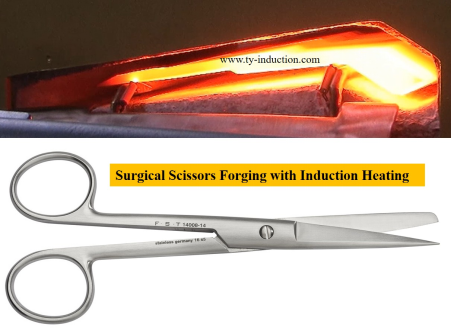
Wrenches, pliers, and cutting tools rely heavily on proper heat treatment to achieve their required mechanical properties. Without precise thermal processing, even the best alloy steel cannot deliver reliable performance.
Key heat treatment stages in tool production include:
· Forging heating – Heating steel billets or bars before forging.
· Hardening – Rapid heating to austenitizing temperature followed by quenching.
· Tempering – Reheating to reduce brittleness and improve toughness.
· Brazing and soldering – Joining components such as jaws, blades, or handles.
· Stress relieving – Eliminating internal stresses after machining or forming.
Traditionally, these processes were handled using gas furnaces, coal-fired furnaces, or resistance heating systems. However, these conventional methods have significant limitations in modern mass production.
Before understanding the advantages of induction heating, it is important to recognize the challenges of traditional thermal processing.
Conventional furnaces heat large volumes of air, refractory materials, and surrounding structures. Only a fraction of the energy is transferred to the workpiece. This results in:
· High fuel or electricity consumption
· Significant heat loss
· Increased operating costs
Gas and resistance furnaces often suffer from uneven temperature distribution. This leads to:
· Inconsistent hardness across batches
· Warping and deformation
· Variable tool life
Traditional furnaces require long warm-up times and slow heating rates. This slows down production lines and limits output capacity.
Combustion-based systems generate:
· CO₂ emissions
· NOx and particulate matter
· Workplace heat pollution
These factors increase compliance costs and worker safety risks.
Old heating systems are difficult to integrate into automated production lines, which restricts scalability and digital manufacturing upgrades.
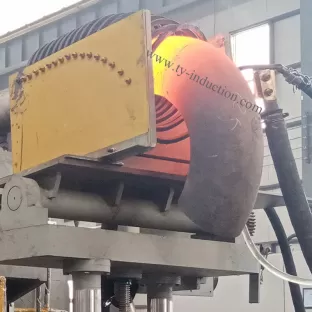
Induction heating is a non-contact heating method that uses electromagnetic fields to generate heat directly inside conductive materials.
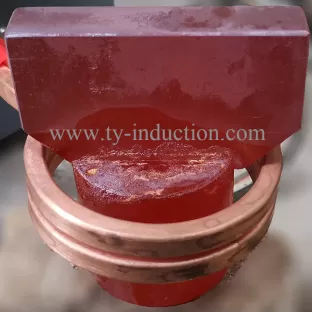
When an alternating current passes through an induction coil, it creates a rapidly changing magnetic field. This field induces eddy currents within the metal workpiece. The resistance of the metal converts these currents into heat.
The result is rapid, localized, and precisely controllable heating without physical contact or combustion.
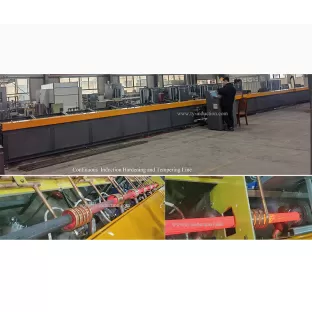
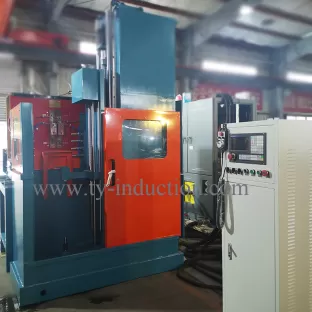
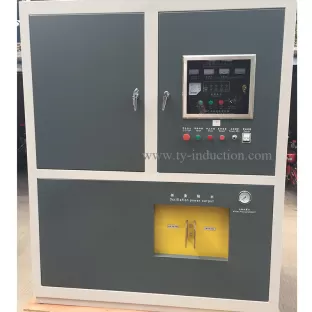
A modern Induction Heating System typically consists of:
· Power supply (inverter)
· Induction coil
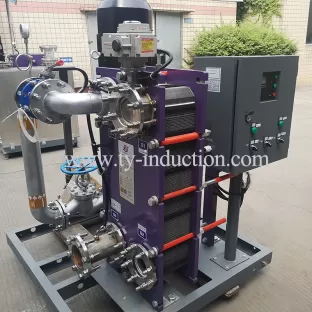
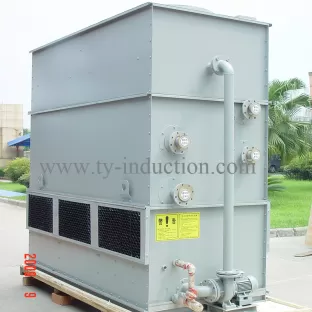
· Cooling system
· Control unit
· Automation interface
This structure makes induction heating highly adaptable to industrial tool manufacturing.
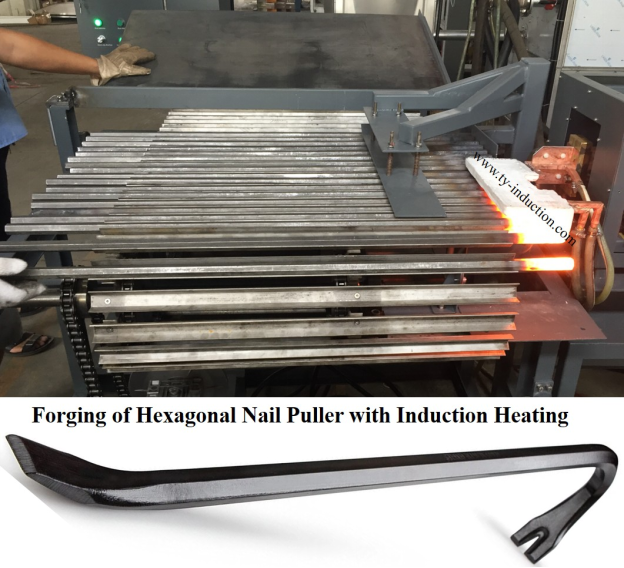
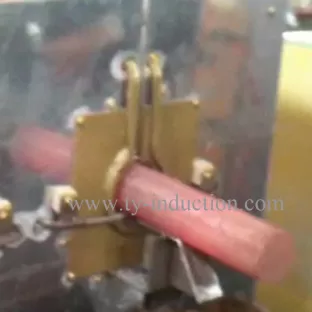
Induction heating can raise steel to forging or hardening temperatures within seconds.
Compared with traditional furnaces:
· Heating time is reduced by 60–90%
· No long warm-up periods
· Instant on/off operation
This enables:
· Faster production cycles
· Higher hourly output
· Reduced work-in-process inventory
For high-volume wrench and plier factories, this speed advantage translates directly into increased profitability.
Induction systems offer precise control over:
· Heating temperature
· Heating depth
· Heating duration
· Heating zone location
Using digital controllers and infrared sensors, manufacturers can maintain temperature deviations within ±2–5°C.
Benefits include:
· Uniform hardness
· Reduced rejection rates
· Stable mechanical performance
· Improved fatigue resistance
This consistency is critical for export-oriented tool manufacturers serving demanding markets such as Europe and North America.
Unlike furnaces that heat the entire workpiece, induction heating can focus energy only where it is needed.
Examples:
· Hardening only the jaws of pliers
· Heating cutting edges of blades
· Localized forging of wrench heads
· Brazing specific joint areas
This selective heating offers:
· Lower energy consumption
· Less distortion
· Better dimensional accuracy
· Extended tool life
Induction heating converts electrical energy directly into heat inside the metal, with minimal losses.
Typical efficiency levels:
· Induction heating: 80–95%
· Gas furnace: 30–50%
· Resistance furnace: 50–65%
For large-scale production, this difference results in:
· Reduced electricity or fuel costs
· Lower carbon footprint
· Faster return on investment
Energy savings alone often justify the equipment upgrade within 1–3 years.
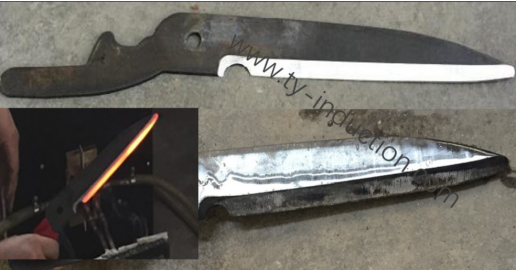
Induction heating produces no open flame, no exhaust gases, and minimal waste heat.
Environmental advantages include:
· Zero combustion emissions
· No flue gas treatment required
· Lower ventilation costs
· Improved workshop environment
With increasingly strict environmental regulations worldwide, induction heating helps manufacturers meet compliance standards while strengthening their green manufacturing image.
Modern tool factories are rapidly adopting:
· Robotic handling
· CNC machining
· Automated assembly
· MES and ERP systems
Induction heating integrates easily into these smart production lines.
Common configurations include:
· Inline hardening stations
· Robotic loading/unloading
· Automated quenching systems
· Closed-loop quality control
This compatibility supports the transition toward Industry 4.0 and intelligent manufacturing.
Traditional furnaces require skilled operators to manage temperature, loading, and timing. Human error often leads to quality problems.
Induction heating systems operate with:
· Pre-programmed recipes
· Automatic power regulation
· Real-time monitoring
As a result:
· Operator skill requirements are lower
· Training costs decrease
· Production stability improves
This is especially valuable in regions facing skilled labor shortages.
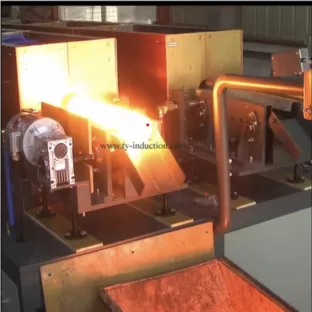
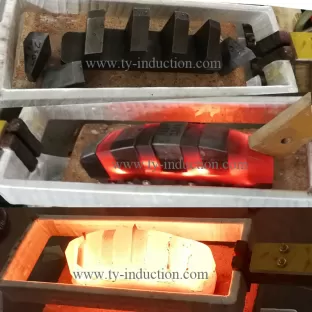
Before forging, steel bars must be heated to 1100–1250°C. Induction heating provides:
· Rapid billet heating
· Uniform core temperature
· Reduced oxidation
This improves forging quality and reduces material loss.
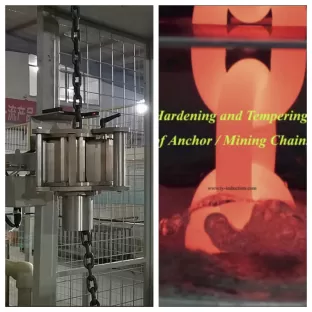
Hardening is essential for wear resistance.
Typical applications:
· Pliers jaws
· Cutter blades
· Wrench heads
· Screwdriver tips
Induction hardening ensures:
· High surface hardness
· Tough core structure
· Extended service life
After quenching, induction tempering precisely reduces brittleness without compromising hardness.
This improves:
· Impact resistance
· Fatigue life
· Product reliability
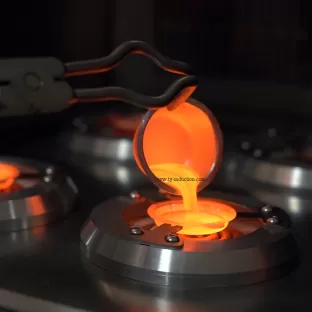
Many composite tools require brazed joints. Induction brazing offers:
· Clean joints
· Strong bonding
· Minimal thermal damage
This is widely used for cutting tools and multi-component pliers.
Although initial investment is higher, induction heating reduces:
· Energy bills
· Scrap rates
· Maintenance costs
· Labor expenses
Over time, total cost per unit decreases significantly.
Shorter production cycles allow manufacturers to:
· Handle urgent orders
· Reduce lead times
· Improve customer satisfaction
This strengthens competitiveness in OEM and private-label markets.
Consistent quality enables:
· Premium pricing
· Brand differentiation
· Reduced warranty claims
High-performance tools command higher margins.
Before switching, manufacturers should evaluate the following factors:
· Material type
· Dimensions
· Hardening depth
· Production volume
These parameters determine system configuration.
Customized coils are critical for heating accuracy and efficiency. Poor coil design can negate system advantages.
The power supply must match:
· Heating speed requirements
· Workpiece size
· Line throughput
Undersized systems cause bottlenecks.
Proper water cooling and electrical infrastructure are essential for long-term stability.
Reliable suppliers should provide:
· Process optimization
· Operator training
· Spare parts support
· Long-term maintenance
The next stage of induction heating development includes:
· AI-based process optimization
· Cloud-connected monitoring
· Predictive maintenance
· Digital twins for thermal simulation
These innovations will further improve efficiency, quality, and transparency in tool manufacturing.
Factories that adopt induction heating today are better positioned to embrace intelligent production tomorrow.
The shift toward induction heating in wrench, plier, and cutting tool production is not a temporary trend—it is a strategic transformation driven by efficiency, quality, sustainability, and automation.
By replacing traditional furnaces with advanced induction solutions, manufacturers gain:
· Faster production cycles
· Superior heat treatment consistency
· Lower operating costs
· Cleaner working environments
· Stronger market competitiveness
In a global market where margins are tightening and customer expectations are rising, induction heating is becoming a foundational technology for long-term success.
TY INDUCTION is committed to helping tool manufacturers build efficient, reliable, and future-ready heat treatment systems that drive productivity, quality, and sustainable growth worldwide.
Hot Products
Contact Us
Enquiry hotline:
+86 135 4128 7190
Email:
Address:
Unit 1, Building 7, No. 1700, North Section of Tianfu Avenue, High-tech Zone, Chengdu, China